Case Study: Solving Tile Debonding Problems in a Residential Project
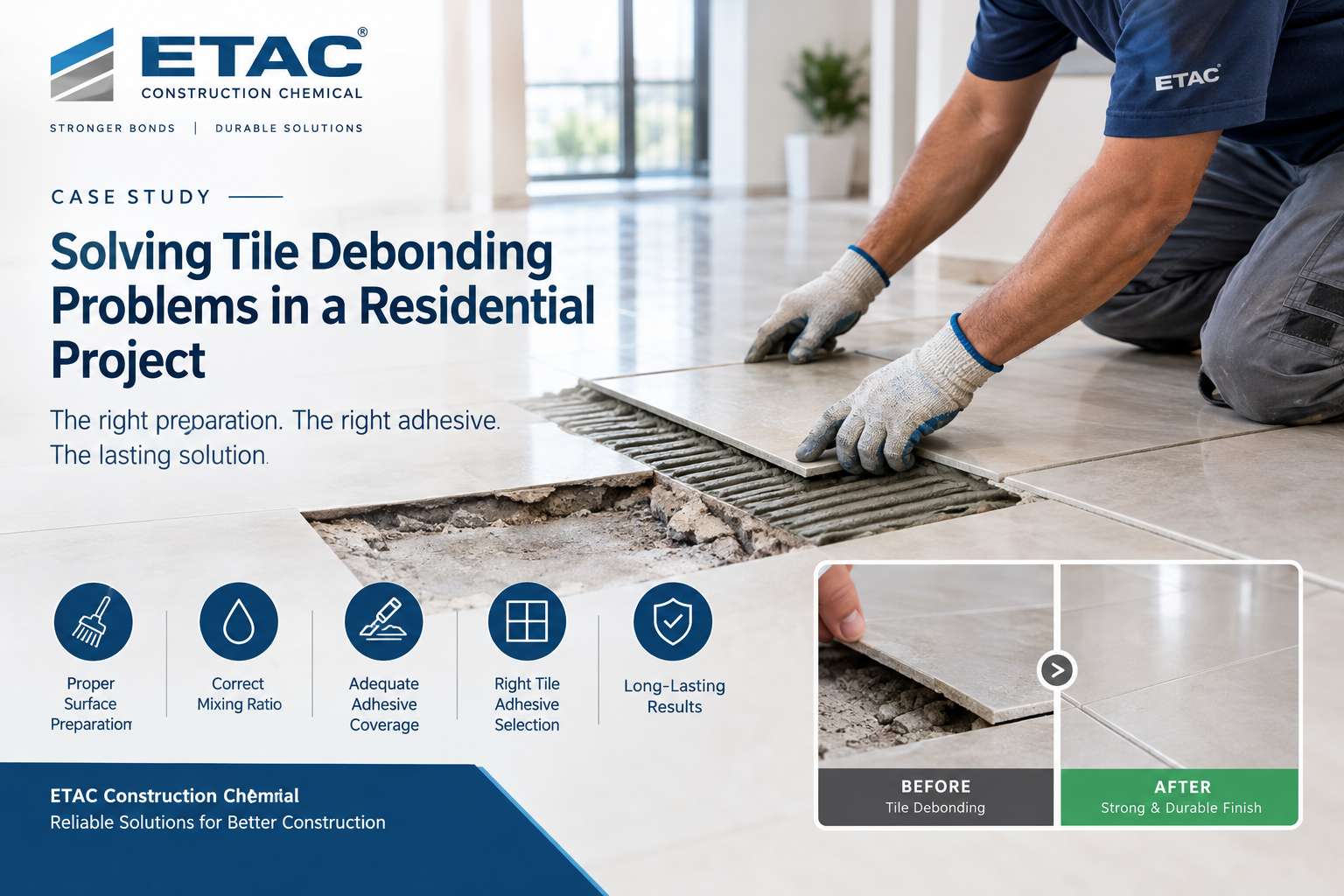
Tile debonding is a common residential construction problem that can result from poor substrate preparation, incorrect adhesive mixing, inadequate adhesive coverage, improper application, or unsuitable product selection. This case study by ETAC Construction Chemical explains a systematic approach to identifying and resolving tile debonding problems. By preparing the substrate correctly, selecting a suitable tile adhesive, following the recommended mixing ratio, ensuring proper adhesive coverage, and applying the tiles within the recommended open time, the risk of recurring tile failure can be significantly reduced. The case highlights ETAC's commitment to reliable construction chemical solutions and better tile installation practices.
Case Study: Solving Tile Debonding Problems in a Residential Project
Tile installation is an important part of modern residential construction, contributing not only to the appearance of a building but also to its durability and functionality. However, even high-quality tiles can fail when the installation system is not properly selected or executed. One of the most common failures observed on residential projects is tile debonding—where tiles become loose, sound hollow when tapped, crack at the joints, or completely detach from the substrate.
At ETAC Construction Chemical, we understand that solving tile failure requires more than simply replacing loose tiles. Identifying the root cause and implementing the correct installation system are essential for achieving a durable and reliable result.
This case study presents a typical residential tile debonding situation and explains how a systematic approach to diagnosis, surface preparation, adhesive selection, and application can help restore tile performance.
Project Situation
A residential project began experiencing tile debonding after the tiling work had been completed. The problem was initially noticed when several floor tiles produced a hollow sound during routine inspection. Over time, some tiles became visibly loose, while isolated areas showed cracked grout joints and movement under foot traffic.
Because the problem was occurring in more than one location, simply replacing individual tiles was unlikely to provide a long-term solution. A detailed assessment of the installation was therefore required.
Identifying the Problem
The affected areas were inspected to understand how and where the bond had failed. The investigation focused on the condition of the substrate, adhesive coverage, mixing procedure, tile placement, and environmental conditions during installation.
The inspection identified several potential contributing factors:
- Inadequate cleaning and preparation of the substrate
- Inconsistent adhesive coverage beneath the tiles
- Improper adhesive mixing practices
- Excessive or insufficient water during mixing
- Installation beyond the recommended open time
- Insufficient attention to movement and joint requirements
These factors demonstrated that tile debonding was not attributable to a single issue. Instead, the performance of the complete tile installation system had to be considered.
Understanding Why Tile Debonding Occurs
Tile bonding depends on effective contact between the tile, adhesive, and substrate. When one or more parts of this system are compromised, the bond can become weak.
Substrate Preparation
A clean and sound substrate is fundamental to successful tile installation. Dust, laitance, oil, loose particles, or weak surface layers can act as a barrier between the adhesive and substrate.
Before applying adhesive, the substrate should therefore be inspected, cleaned, and prepared according to the requirements of the particular installation.
Adhesive Mixing
Tile adhesive is formulated to perform within a specific mixing range. Adding excessive water can change the material's consistency and may adversely affect installation performance. Conversely, insufficient water can make the adhesive difficult to spread and prevent proper contact.
For this reason, ETAC recommends following the product's specified mixing instructions rather than adjusting the water quantity based only on site preference.
Adhesive Coverage
Inadequate coverage can create voids beneath tiles. These unbonded areas can reduce the effective contact between the tile and adhesive and may become particularly problematic under mechanical loads, moisture exposure, or temperature-related movement.
Using the correct notched trowel and applying the adhesive with the appropriate technique helps achieve more consistent coverage.
Open Time
Tile adhesive should be used within its recommended open time. If adhesive is spread over an excessively large area and tiles are installed after the surface has started forming a skin, effective bonding can be reduced.
ETAC's Corrective Solution
After assessing the affected areas, the corrective work was planned around one key objective: address the cause of the debonding rather than simply treating its visible symptoms.
1. Removal of Failed Tiles
Loose and severely debonded tiles were carefully removed. The exposed substrate was then examined for weak areas, cracks, contamination, and other defects.
2. Thorough Surface Preparation
The substrate was cleaned to remove dust, loose particles, and other materials that could interfere with adhesion. Any damaged or unsuitable sections were repaired before the new tile installation began.
3. Selection of the Appropriate ETAC Adhesive
An appropriate ETAC tile adhesive was selected based on the tile type, substrate, location, and service conditions. Product selection is an important part of the process because different tile formats and applications can require different performance characteristics.
4. Controlled Mixing
The adhesive was mixed using clean water in accordance with the manufacturer's recommended ratio and procedure. Proper mixing was emphasized to achieve a consistent and workable adhesive without unnecessarily altering its designed formulation.
5. Correct Application Technique
The adhesive was applied using a suitable notched trowel. Attention was given to the direction and depth of the trowel ridges, adhesive coverage, and working area.
For larger tiles and demanding applications, appropriate back-buttering practices may also be considered to improve contact between the tile and adhesive.
6. Correct Tile Placement
The tiles were positioned within the recommended open time and pressed firmly into the adhesive bed. Proper movement and adjustment techniques were used to achieve effective contact while maintaining the required alignment and joints.
7. Final Inspection
After allowing the installation to develop adequate strength, the repaired areas were inspected for bonding consistency, alignment, joint condition, and visible defects.
Outcome of the Corrective Work
The corrective process demonstrated that successful tile repair depends on addressing the entire installation system. By improving substrate preparation, adhesive selection, mixing control, adhesive coverage, and tile placement practices, the conditions contributing to debonding were addressed.
The case also reinforced an important construction principle: the performance of a tile installation depends not only on the quality of the tile adhesive, but also on how the complete system is prepared and installed.
Key Takeaways for Residential Projects
- Prepare the substrate properly: A clean, sound, and suitable surface is essential for effective bonding.
- Follow the recommended mixing ratio: Do not add additional water simply to make the adhesive easier to spread.
- Use the correct adhesive: Product selection should consider tile size, substrate, location, and service conditions.
- Maintain adequate adhesive coverage: Avoid unnecessary voids beneath the tile.
- Respect open time: Spread only an appropriate working area that can be tiled within the specified time.
- Use proper tools and techniques: Correct trowel selection and application technique contribute to consistent bonding.
- Consider movement: Appropriate joints and movement provisions are important where required by the installation conditions.
- Investigate failures systematically: Replacing loose tiles without identifying the underlying cause can result in recurring problems.
ETAC Construction Chemical: Supporting Better Tile Installation
At ETAC Construction Chemical, our objective is to provide construction chemical solutions that support reliable, durable, and efficient construction practices. Tile installation is a system-based process in which substrate preparation, product selection, mixing, application, and workmanship all contribute to the final performance.
Our approach goes beyond simply supplying a product. We believe that the right material must be combined with the right application method to achieve dependable results on site.
For residential projects, contractors, applicators, architects, and construction professionals, understanding the causes of tile debonding can help prevent costly repairs and improve the service life of finished surfaces.
Conclusion
Tile debonding is often the visible result of problems occurring earlier in the installation process. Poor substrate preparation, incorrect mixing, inadequate adhesive coverage, improper application, unsuitable product selection, and insufficient consideration of site conditions can all contribute to premature tile failure.
The residential project discussed in this case study demonstrates the importance of a systematic approach to tile installation and repair. By identifying the root cause, preparing the substrate correctly, selecting a suitable ETAC tile adhesive, following the recommended mixing procedure, and applying the adhesive correctly, the risk of recurring debonding can be significantly reduced.
ETAC Construction Chemical remains committed to supporting the construction industry with dependable solutions and practical technical guidance for better-performing tile installations.
pchejara
Verified Technical AdvisorySenior Construction Chemical Specialist at ETAC®. Advising contractors, applicators, and site engineers across India on tile adhesives, epoxy grouts, and waterproofing systems.
Ask Technical Specialist on WhatsApp →Need Tile Adhesives or Technical Support?
Explore our full range of high-grade polymers, tile adhesives, epoxy grouts, and waterproofing chemicals manufactured at Navsari, Gujarat.