How Indian Weather Affects Tile Adhesive Curing
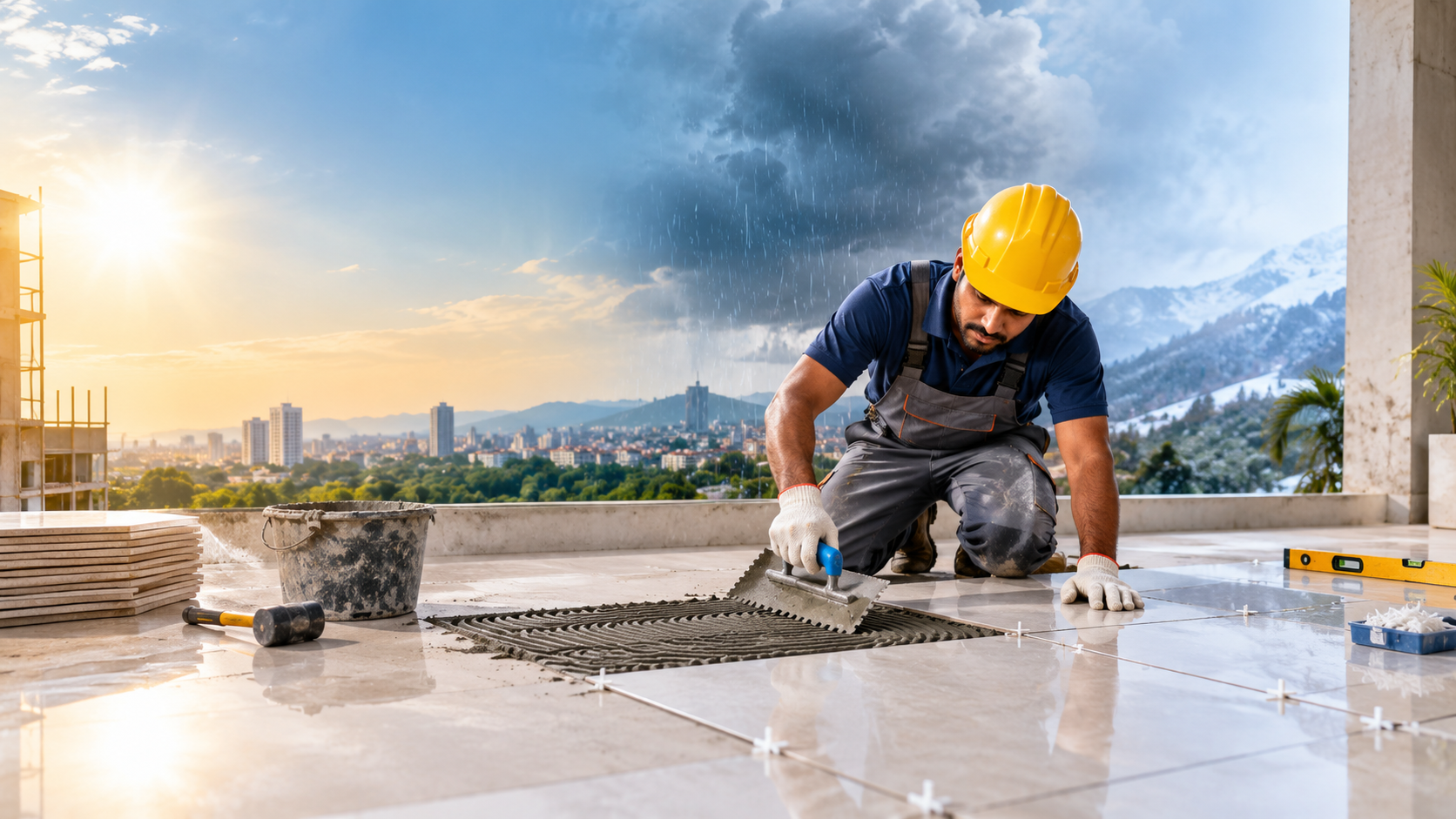
Indian weather can significantly affect tile adhesive curing. Extreme summer heat may accelerate moisture loss, while high humidity and monsoon conditions can slow drying. Cold temperatures can also delay strength development. Understanding these weather-related factors and following proper mixing, application, protection, and curing practices can help achieve a stronger and more durable tile installation.
How Indian Weather Affects Tile Adhesive Curing
Tile installation is not only about selecting the right tiles and adhesive. Weather and site conditions play a critical role in the curing, bonding strength, and long-term performance of tile adhesive. In a country like India, where climatic conditions vary significantly—from extreme summer heat and dry weather to high humidity and heavy monsoon rainfall—understanding the effect of weather on tile adhesive curing is essential for achieving durable and reliable tile installations.
At ETAC Construction Chemical, we understand that construction materials need to perform under diverse Indian site conditions. Proper adhesive selection, surface preparation, mixing, application, and curing practices can significantly improve the quality and service life of tiled surfaces.
Understanding Tile Adhesive Curing
Tile adhesive curing is the process through which the adhesive develops its intended strength and performance after application. Cement-based tile adhesives require water for cement hydration, while the overall curing and drying behavior is also influenced by environmental conditions.
Temperature, humidity, substrate moisture, ventilation, and exposure to water can all affect the curing process. If these factors are not properly managed, the adhesive may not achieve its expected performance.
1. How High Summer Temperatures Affect Tile Adhesive
Indian summers can create challenging conditions for tile installation. In many regions, both ambient temperatures and substrate temperatures can become extremely high, particularly when surfaces are exposed to direct sunlight.
High temperatures can cause moisture to evaporate from the adhesive more quickly. This can reduce the adhesive's available working time and may lead to premature surface drying or skin formation.
Potential consequences include:
- Reduced open time
- Difficulty adjusting tiles after placement
- Inadequate contact between tile and adhesive
- Reduced bonding performance
- Increased risk of installation defects
For this reason, installers should avoid applying adhesive to excessively hot surfaces whenever possible and should follow the manufacturer's recommended application temperature range.
2. The Impact of India's Monsoon Season
The Indian monsoon brings high humidity, frequent rainfall, and increased moisture levels. These conditions can significantly change the way tile adhesive cures.
High humidity can slow moisture evaporation, potentially extending drying and curing times. Direct exposure to rain or standing water can create additional problems, particularly when the adhesive has not developed sufficient strength.
During monsoon installation:
- Protect freshly installed tiles from direct rain.
- Avoid working on surfaces with standing water.
- Ensure the substrate is properly prepared.
- Allow adequate curing time before exposing the installation to water or heavy traffic.
- Follow the adhesive manufacturer's technical recommendations.
Proper site protection is especially important for balconies, terraces, bathrooms, external walls, and other areas exposed to moisture.
3. Humidity and Its Effect on Curing
Humidity is another important environmental factor. Coastal and humid regions of India can experience high atmospheric moisture for extended periods. When humidity is high, moisture may evaporate more slowly from the adhesive system. As a result, the time required for certain stages of drying or curing may increase.
Temperature and humidity should always be considered together with the product's technical data and recommended application conditions.
4. Cold Weather Can Slow the Process
Although extreme cold is less common across much of India, northern and mountainous regions can experience significantly lower temperatures during winter. Lower temperatures can slow cement hydration and the development of adhesive strength. In such conditions, the adhesive may require more time to achieve its intended performance. Installers should avoid rushing subsequent construction activities and should allow the adhesive sufficient time to cure according to the manufacturer's recommendations.
5. Substrate Temperature Matters Too
A common mistake is to consider only the surrounding air temperature. The actual temperature of the floor, wall, concrete, screed, or plaster substrate can be significantly different from the ambient temperature. A surface exposed to direct sunlight can become considerably hotter than the surrounding air.
Before application, the substrate should be properly prepared and should comply with the adhesive manufacturer's recommended conditions.
The surface should generally be:
- Clean and free from dust and loose particles
- Structurally sound
- Properly prepared
- Free from standing water
- Suitable for the selected tile adhesive
Proper substrate preparation provides a stable foundation for effective adhesive bonding.
6. Why Correct Water Mixing Is Essential
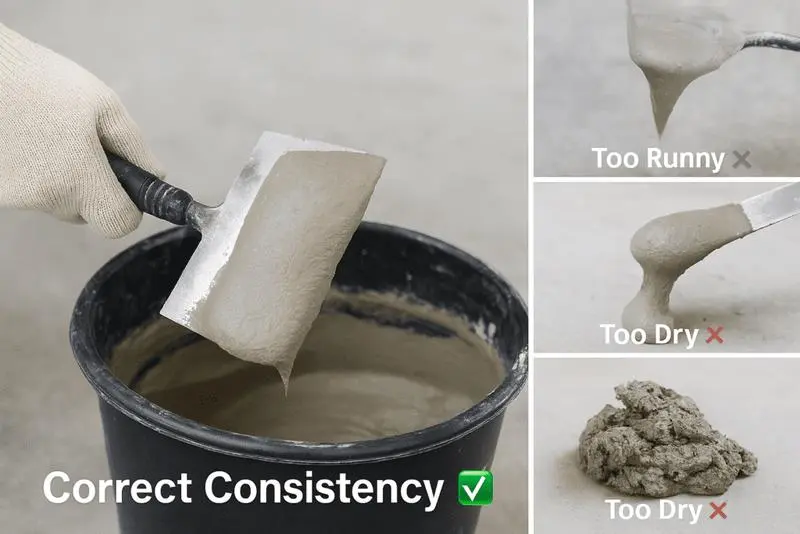
Weather conditions should never be used as a reason to randomly increase or decrease the amount of water added to tile adhesive. Adding excessive water can negatively affect the consistency and performance of a cement-based adhesive. Too little water, on the other hand, can make the adhesive difficult to spread and may interfere with proper hydration.
The recommended powder-to-water ratio specified by the manufacturer should always be followed.
At ETAC Construction Chemical, following product-specific application instructions is an important part of achieving consistent performance on site.
7. Open Time and Working Time Can Change With Weather
Weather conditions can also influence the adhesive's practical working behavior. In hot and dry conditions, the adhesive may lose moisture more quickly, reducing the effective open time. If tiles are installed after the adhesive has begun forming a surface skin, proper contact may not be achieved. In humid or cooler conditions, the adhesive may remain workable for longer, but curing and drying can take more time.
Therefore, installers should monitor the adhesive during application rather than relying solely on a fixed time assumption.
8. Tile Installation During Direct Sunlight
Direct sunlight can create particularly difficult conditions for outdoor tile installation. When adhesive, substrate, and tiles are heated by the sun, moisture can be lost rapidly. This can make application more challenging and increase the possibility of premature drying. Where site conditions permit, installers should consider working during cooler periods of the day and protecting materials and freshly installed areas from excessive heat.
9. Practical Tips for Tile Installation in Indian Conditions
To achieve reliable tile adhesive performance across India's diverse climate zones, professional installers should follow good site practices:
- Check the site conditions: Evaluate temperature, humidity, substrate condition, moisture, and exposure to sunlight or rain.
- Follow the correct mixing ratio: Use the water quantity specified in the product's technical documentation.
- Avoid excessively hot surfaces: Where possible, avoid applying adhesive to surfaces that are extremely hot due to direct sunlight.
- Protect freshly installed tiles: During monsoon conditions, protect new installations from direct rain and water exposure.
- Respect open and curing times: Do not rush tile adjustment, grouting, or foot traffic.
- Use the right adhesive: Select the product according to tile type, size, substrate, location, and environmental exposure.
Weather Conditions and Tile Adhesive: Quick Reference
| Weather Condition | Possible Effect | Recommended Practice |
|---|---|---|
| High temperature | Faster moisture loss and reduced working time | Avoid excessively hot surfaces and direct sunlight where possible |
| Low temperature | Slower strength development | Allow additional curing time where required |
| High humidity | Slower moisture evaporation | Allow adequate drying and curing time |
| Heavy rain | Excess moisture and potential disturbance | Protect fresh installations from rain |
| Direct sunlight | Rapid heating and surface drying | Schedule work appropriately and protect materials |
| Wet substrate | Poor installation conditions | Remove standing water and follow substrate requirements |
The ETAC Approach to Reliable Tile Installation
India's varied climate requires a practical approach to construction chemical application. A high-quality tile adhesive must be supported by correct preparation, accurate mixing, proper application, and suitable curing conditions.
At ETAC Construction Chemical, our focus is on providing construction chemical solutions designed to support dependable performance across a wide range of building applications. By combining suitable products with correct installation practices, contractors, builders, and applicators can achieve stronger and more durable tiled surfaces.
Conclusion
Indian weather can significantly influence tile adhesive curing and overall installation performance. Extreme heat can accelerate moisture loss, high humidity can slow drying, rain can introduce excess moisture, and lower temperatures can delay strength development.
However, many weather-related installation problems can be minimized through proper planning and professional application practices.
The key is to understand the site conditions, select the appropriate tile adhesive, follow the recommended mixing and application procedures, and provide adequate protection and curing time.
At ETAC Construction Chemical, we believe that durable tile installation begins with the right product and the right application practices—because performance is built into every detail.
pchejara
Verified Technical AdvisorySenior Construction Chemical Specialist at ETAC®. Advising contractors, applicators, and site engineers across India on tile adhesives, epoxy grouts, and waterproofing systems.
Ask Technical Specialist on WhatsApp →Need Tile Adhesives or Technical Support?
Explore our full range of high-grade polymers, tile adhesives, epoxy grouts, and waterproofing chemicals manufactured at Navsari, Gujarat.