What Happens When Tile Adhesive Is Mixed With Too Much Water?
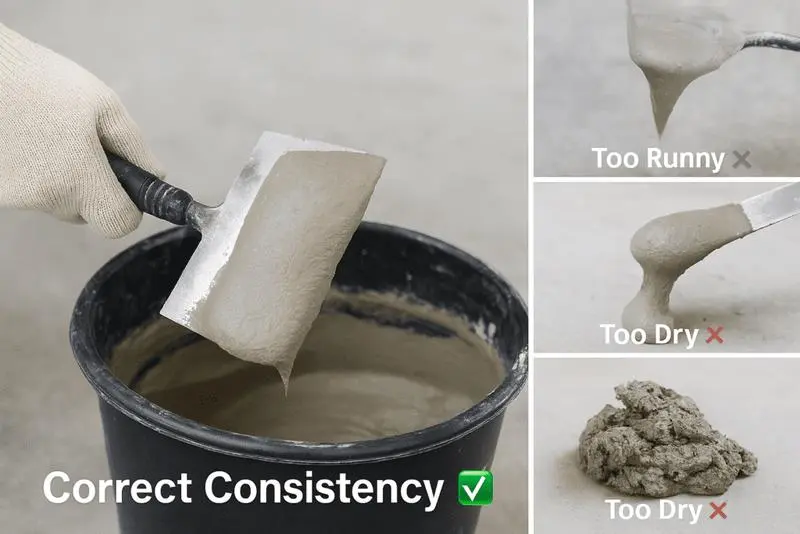
Using too much water when mixing tile adhesive can negatively affect its bond strength, consistency, curing, coverage, and long-term durability. Although excess water may make the adhesive easier to spread, it can increase the risk of tile sagging, shrinkage, cracking, and debonding. For reliable and durable tile installation, always follow the manufacturer’s recommended water-to-powder ratio and mixing procedure. ETAC Construction Chemical promotes proper application practices to help achieve consistent and long-lasting construction results.
What Happens When Tile Adhesive Is Mixed With Too Much Water?
Tile adhesive is engineered to provide strong, durable and reliable bonding between tiles and the substrate. However, achieving the expected performance depends not only on selecting the right adhesive but also on mixing and applying it according to the manufacturer's recommended procedure.
One of the most common mistakes during tile installation is adding too much water to tile adhesive. While a thinner mixture may appear easier to spread, excess water can significantly affect the adhesive's consistency, bonding performance and long-term durability.
At ETAC Construction Chemical, we believe that proper mixing is just as important as choosing the right construction chemical. Understanding what happens when excessive water is added can help applicators avoid preventable installation problems.
Why Is the Correct Water Ratio Important?
Tile adhesive is formulated with a carefully balanced combination of cementitious binders, graded fillers, polymers and other performance-enhancing additives. The recommended water-to-powder ratio is established to achieve the intended workability, adhesion, open time and mechanical performance of the product.
When more water than recommended is added, this carefully designed formulation is diluted. The result may be a mixture that feels smooth and workable initially but does not necessarily deliver the same performance after curing.
In simple terms: More water does not mean better workability—it can mean weaker performance.
What Happens When Too Much Water Is Added to Tile Adhesive?
1. Reduced Bond Strength
Excess water increases the amount of water that must eventually leave the adhesive during the curing process. This can result in a weaker hardened matrix and may reduce the adhesive's ability to maintain a strong bond with the tile and substrate.
Over time, poor bonding can contribute to problems such as:
- Loose tiles
- Hollow-sounding tiles
- Tile debonding
- Movement or instability of tiles
- Premature repair requirements
For critical installations, maintaining the recommended mixing ratio is therefore essential.
2. Increased Shrinkage and Cracking Risk
When excess water evaporates from the adhesive, the material can undergo greater volume changes during drying and curing. Depending on installation conditions, excessive water may increase the risk of:
- Shrinkage
- Microcracking
- Loss of contact between adhesive and substrate
- Reduced overall durability
A properly mixed adhesive is designed to cure as a cohesive system. Altering the water content can disturb this balance.
3. Poor Consistency and Tile Sagging
An adhesive containing too much water may become excessively fluid. Although this can make spreading appear easier, it may reduce the adhesive's ability to hold the tile in its intended position. On vertical surfaces, an overly wet adhesive may be more prone to tile slipping or sagging, particularly when installing heavier tiles. This can make it more difficult to achieve accurate tile alignment and a consistent finished surface.
4. Reduced Coverage and Tile Contact
Proper tile installation requires sufficient adhesive coverage and good contact between the adhesive, substrate and tile. An overly diluted adhesive may not maintain the intended body and consistency during application. This can affect the formation of an effective adhesive bed and potentially create areas of inadequate contact. Insufficient contact can become particularly problematic in installations exposed to moisture, movement or mechanical stresses.
5. Longer or Unpredictable Drying and Curing
More water means additional moisture needs to be removed or consumed during the curing process. As a result, excessive water can alter the adhesive's drying or curing behavior. This may delay subsequent installation activities, such as grouting, and can make the overall installation process less predictable. Actual drying and curing times depend on factors such as temperature, humidity, substrate absorption, tile type and site conditions.
6. Inconsistent Material Performance
If an adhesive mixture is excessively wet, its components may not remain uniformly distributed throughout the mix. Under certain conditions, this can contribute to inconsistent material behavior during application. A properly proportioned mixture helps ensure that the cementitious components, fillers and additives work together as intended.
Can Adding More Water Make Tile Adhesive Easier to Apply?
Yes—but easier does not necessarily mean better.
An applicator may add water because the adhesive feels too stiff or difficult to spread. Initially, the mixture may become smoother and easier to handle. However, this short-term improvement in workability can come at the expense of the adhesive's designed performance. The correct approach is to follow the manufacturer's specified mixing ratio and mixing procedure rather than adjusting the water quantity based only on how the adhesive feels during application.
What Is the Correct Way to Mix Tile Adhesive?
For reliable results, applicators should always follow the technical instructions supplied with the specific tile adhesive.
Step 1: Measure the Water
Use clean water and measure the required quantity according to the product's technical instructions.
Step 2: Add the Powder Gradually
Add the tile adhesive powder to the measured water while mixing.
Step 3: Mix Thoroughly
Use a suitable mechanical mixer at an appropriate speed to achieve a smooth, lump-free and uniform consistency.
Step 4: Allow the Required Resting Time
Where specified by the manufacturer, allow the mixed adhesive to mature for the recommended period.
Step 5: Remix Before Application
Remix the material as instructed without adding additional water unless specifically permitted by the product manufacturer.
Step 6: Apply Within the Recommended Working Time
Spread and comb the adhesive using the appropriate notched trowel and install the tiles within the specified open time.
What If Too Much Water Has Already Been Added?
If excessive water has been added to the adhesive, do not simply add extra powder unless the manufacturer's technical instructions specifically allow this correction. Changing the powder-to-water ratio after mixing can create an inconsistent formulation and may affect the final performance. The safest approach is to prepare a fresh batch using the correct water quantity and follow the product's technical data sheet.
Best Practices for Professional Tile Installation
Correct water measurement is only one part of achieving a durable tile installation. Professional applicators should also pay attention to:
- Proper substrate preparation
- Correct adhesive selection for the tile and application area
- Accurate powder-to-water ratio
- Thorough and uniform mixing
- Appropriate trowel selection
- Adequate adhesive coverage
- Correct tile placement technique
- Respecting open time and pot lif
- Proper grouting procedures
- Suitable curing and site conditions
Following the complete installation procedure helps the adhesive perform according to its intended design.
ETAC Construction Chemical: Building Performance Into Every Application
At ETAC Construction Chemical, we understand that the performance of a construction chemical depends on more than the product itself. Correct preparation, application and site practices are equally important.
Tile adhesive should be treated as an engineered construction material—not simply as a mixture that can be adjusted according to convenience. Maintaining the manufacturer's recommended water ratio helps preserve the intended consistency, adhesion and durability of the adhesive.
Frequently Asked Questions About Tile Adhesive and Water
What happens if I add too much water to tile adhesive?
Adding too much water can make tile adhesive excessively fluid and may negatively affect its intended consistency, bonding performance, curing behavior and durability. Always follow the manufacturer's recommended water-to-powder ratio.
Can too much water cause tiles to come loose?
Excessive water can contribute to reduced adhesive performance and inadequate bonding. Over time, this may increase the risk of loose tiles or debonding, depending on the product and installation conditions.
Can I add more powder after adding too much water?
Do not add additional powder unless the adhesive manufacturer specifically provides instructions for correcting an over-watered mixture. The recommended approach is generally to prepare a fresh batch using the correct proportions.
Does more water make tile adhesive stronger?
No. Adding more water does not make tile adhesive stronger. Tile adhesive is formulated to perform within a specific powder-to-water ratio, and adding excess water can compromise its intended properties.
How can I get the best performance from tile adhesive?
Use the correct adhesive for the application, measure water accurately, mix according to the manufacturer's instructions, prepare the substrate properly and follow recommended application procedures.
The Bottom Line
Too much water may make tile adhesive easier to spread, but it can compromise the performance you expect from the product.
Excess water can contribute to reduced bond strength, increased shrinkage, inconsistent curing, sagging, poor coverage and other installation problems. For professional and durable tile installation, always:
Measure the water accurately. Mix according to the product instructions. Never compromise the recommended formulation for short-term convenience.
ETAC Construction Chemical is committed to supporting better construction practices through reliable construction chemical solutions and practical application knowledge.
Always refer to the latest product technical data sheet, packaging instructions and manufacturer's recommendations for the specific tile adhesive being used. Site conditions and application requirements may vary.
pchejara
Verified Technical AdvisorySenior Construction Chemical Specialist at ETAC®. Advising contractors, applicators, and site engineers across India on tile adhesives, epoxy grouts, and waterproofing systems.
Ask Technical Specialist on WhatsApp →Need Tile Adhesives or Technical Support?
Explore our full range of high-grade polymers, tile adhesives, epoxy grouts, and waterproofing chemicals manufactured at Navsari, Gujarat.