General
Why Bathroom Waterproofing Fails at Pipe Joints
pchejara
September 12, 2026
7 min read
10 views
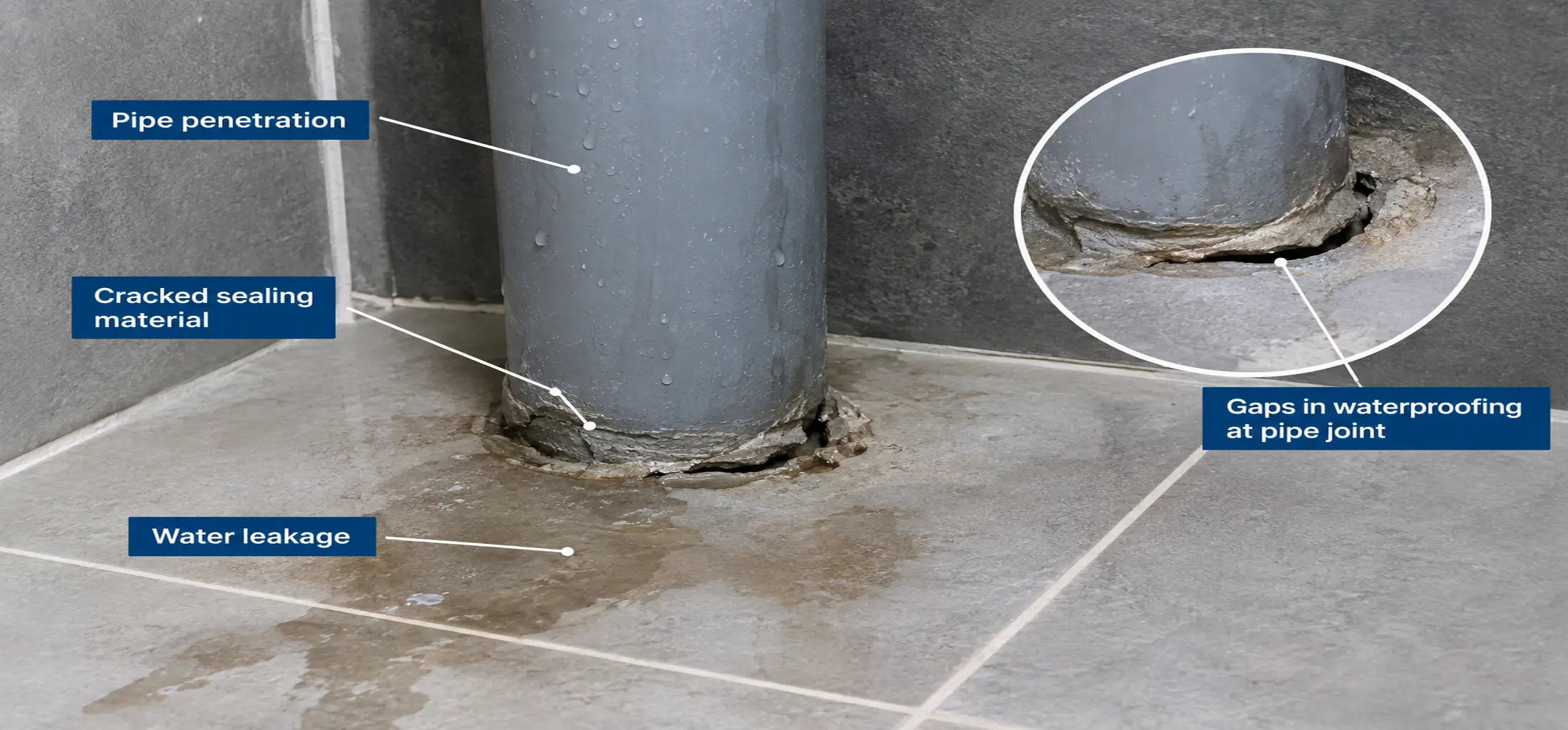
Bathroom waterproofing often fails at pipe joints because these areas are exposed to movement, gaps, poor sealing, and improper detailing. Effective waterproofing requires proper surface preparation, flexible sealing, reinforcement where necessary, and integration of pipe joints with the overall waterproofing system. **ETAC Construction Chemical** provides reliable construction chemical solutions designed to support durable and effective waterproofing.
Table of Contents
Why Bathroom Waterproofing Fails at Pipe Joints
Bathroom waterproofing is one of the most critical aspects of modern construction. Yet, even when a high-quality waterproofing system is used across the floor and walls, leakage can still occur—often at one of the most vulnerable areas: pipe joints and pipe penetrations.
Pipe joints are common points of failure because they involve the connection of different materials, movement, changes in geometry, and continuous exposure to moisture. If these areas are not detailed and treated correctly, water can find its way behind the waterproofing layer and cause dampness, staining, mould growth, tile damage, and deterioration of the underlying structure.
At ETAC Construction Chemical, we believe that successful waterproofing is not simply about applying a waterproof coating. It is about understanding the substrate, identifying vulnerable areas, and using the right system and detailing techniques for long-term protection.
Why Are Pipe Joints So Vulnerable?
A waterproofing membrane generally performs best when it forms a continuous layer over a stable and properly prepared surface. Pipe penetrations interrupt this continuity.
The problem becomes more significant because pipes and the surrounding concrete or mortar can behave differently under temperature changes, vibration, settlement, and structural movement. Even small movements can create gaps or microcracks around the pipe.
Once a gap develops, water can travel through the smallest opening and migrate behind the tiles or into the substrate.
1. Improper Sealing Around the Pipe
One of the most common causes of bathroom leakage is inadequate sealing between the pipe and the surrounding substrate. Simply filling the gap with ordinary cement mortar may provide a temporary solution, but rigid materials can crack when exposed to movement. A pipe penetration should be treated as a dedicated waterproofing detail using compatible, flexible materials and appropriate reinforcement where required.
2. Movement Between Different Materials
Bathrooms commonly contain a combination of concrete, masonry, mortar, PVC, CPVC, metal, and other materials. Each material has different characteristics, including thermal expansion and movement. When these materials meet at a pipe penetration, stresses can develop at the interface. A waterproofing system that does not accommodate this movement may crack or lose adhesion around the pipe. This is why flexibility and compatibility are important considerations when selecting waterproofing materials for pipe-joint areas.
3. Waterproofing Applied Without Proper Detailing
Another frequent mistake is treating the pipe penetration as if it were an ordinary part of the floor or wall. Applying a waterproofing coating over the surrounding surface without properly detailing the pipe junction may leave weak points around the penetration.
- Professional waterproofing requires special attention to:
- Pipe-to-floor junctions
- Pipe-to-wall junctions
- Floor drains
- Sanitary fittings
- Sleeves and service penetrations
- Corners and changes in direction
These areas should be incorporated into the overall waterproofing system rather than treated as an afterthought.
4. Poor Surface Preparation
Even a technically advanced waterproofing product cannot compensate for poor surface preparation. Dust, laitance, loose particles, oil, contamination, weak mortar, or an unsuitable substrate can prevent proper adhesion. Before waterproofing around pipe joints, the area should be properly inspected, cleaned, repaired, and prepared according to the requirements of theselected waterproofing system. The pipe itself should also be clean and free from contaminants that could interfere with the sealing or bonding process.
5. Rigid Repair Materials in Movement-Prone Areas
A common site practice is to pack gaps around pipes with cement mortar and assume that the waterproofing layer will take care of the rest. However, pipe penetrations can experience movement. If the surrounding repair is too rigid, cracks may develop at the pipe-substrate interface. The solution is not simply to use more cement. Instead, the joint needs to be designed and sealed with materials that are appropriate for the expected movement and exposure conditions.
6. Water Reaching the Waterproofing Layer Through Failed Joints
In bathrooms, water does not always remain on the surface. Water can enter through tile joints, gaps around sanitary fixtures, damaged grout, or poorly sealed penetrations. Once it reaches a weak point around a pipe, it can migrate beneath the surface. This can result in symptoms appearing far away from the original point of entry. For example, leakage may become visible on the ceiling of the room below even though the actual waterproofing failure is around a bathroom pipe several centimetres or metres away. Therefore, identifying the visible location of leakage is not always enough. The entire waterproofing system and its vulnerable junctions should be investigated.
How to Prevent Waterproofing Failure at Pipe Joints
Long-lasting bathroom waterproofing begins with correct detailing and workmanship.
A reliable approach should include:
1. Plan Pipe Penetrations Before Waterproofing
Pipe locations should be finalized as far as practical before the waterproofing application begins. Unnecessary cutting, chasing, or drilling after waterproofing can compromise the membrane.
2. Prepare the Junction Properly
Remove loose material, dust, laitance, and contaminants. Repair damaged or weak areas before applying the waterproofing system.
3. Use a Compatible Flexible Sealing System
The sealing material should be compatible with both the pipe material and the waterproofing system. Flexible detailing helps accommodate minor movement at the interface.
4. Reinforce Critical Areas Where Required
For high-risk junctions, reinforcement accessories or compatible reinforcing materials can help strengthen the transition between the pipe and surrounding substrate.
5. Integrate the Detail With the Main Waterproofing
The pipe-joint treatment should not be an isolated repair. It must form a continuous part of the overall waterproofing system.
6. Follow the Manufacturer's Application Guidelines
Waterproofing systems are engineered as complete systems. Correct mixing, application thickness, curing, detailing, and compatibility between products are essential to achieving the intended performance.
Waterproofing Is a System, Not Just a Coating
One of the biggest misconceptions in construction is that waterproofing simply means applying a waterproof material to a surface. In reality, successful waterproofing depends on several factors working together:
Substrate preparation + correct detailing + compatible materials + proper application + curing + quality workmanship = durable waterproofing
Pipe joints demonstrate this principle particularly well. Even an excellent waterproofing membrane can fail if the pipe penetration is incorrectly prepared or detailed.
ETAC Construction Chemical: Building Protection Through Better Waterproofing
At ETAC Construction Chemical, our approach to waterproofing focuses on performance, proper application, and system-based protection.
We understand that every bathroom contains multiple vulnerable junctions, and pipe penetrations require particular attention. The objective is not merely to stop water temporarily, but to create a durable waterproofing system capable of protecting the substrate under real service conditions.
For contractors, applicators, architects, and project owners, the key takeaway is simple:
A waterproof bathroom is only as strong as its weakest joint.
By identifying pipe penetrations as critical waterproofing details and treating them with the appropriate materials and application methods, the risk of leakage can be significantly reduced.
Final Thoughts
Bathroom waterproofing failures at pipe joints are rarely caused by a single factor. They are commonly the result of inadequate detailing, movement, poor surface preparation, incompatible materials, or improper application.
The good news is that these failures are largely preventable.
With proper planning, suitable waterproofing materials, flexible joint treatment, correct detailing, and skilled application, pipe penetrations can
becom an integral part of a reliable waterproofing system rather than a recurring source of leakage.
ETAC Construction Chemical is committed to helping the construction industry achieve better, more durable waterproofing through the right products, systems, and application practices.
Share this article with your network:
pchejara
Verified Technical AdvisorySenior Construction Chemical Specialist at ETAC®. Advising contractors, applicators, and site engineers across India on tile adhesives, epoxy grouts, and waterproofing systems.
Ask Technical Specialist on WhatsApp →
ETAC® Product Formulations
Need Tile Adhesives or Technical Support?
Explore our full range of high-grade polymers, tile adhesives, epoxy grouts, and waterproofing chemicals manufactured at Navsari, Gujarat.